WordPress Plugin Development
WordPress Plugin Development: The Ultimate Guide to Building Custom Plugins
Learn how to extend the functionality of your WordPress website or store by writing custom, secure software plugins according to modern engineering standards.
Table of Contents
- 1. Introduction: What Are WordPress Plugins and What Is Their Core Role?
- 2. Core Mechanisms: Hooks – Actions and Filters
- 3. Essential Steps to Begin Developing Your First Custom WordPress Plugin
- 4. Why Do Companies Choose Custom Plugin Development Over Pre-Built Ones?
- 5. Frequently Asked Questions (FAQ)
1. Introduction: What Are WordPress Plugins and What Is Their Core Role?
**WordPress Plugins** are software components written in PHP that integrate with WordPress to add new features or modify the site’s default behavior. Instead of altering core theme files, plugins allow you to completely separate code logic from design, streamlining updates and maintenance.
2. Core Mechanisms: Hooks – Actions and Filters
The WordPress architecture relies entirely on the **Hooks** principle, which is split into two primary types:
- Actions: Allow you to execute code or append content at specific points during WordPress execution (such as sending an email when an order is completed).
- Filters: Allow you to intercept and modify data before it is rendered to the user or saved to the database (such as modifying text or a product price).
3. Essential Steps to Begin Developing Your First Custom WordPress Plugin
Creating a new plugin starts through simple, organized steps:
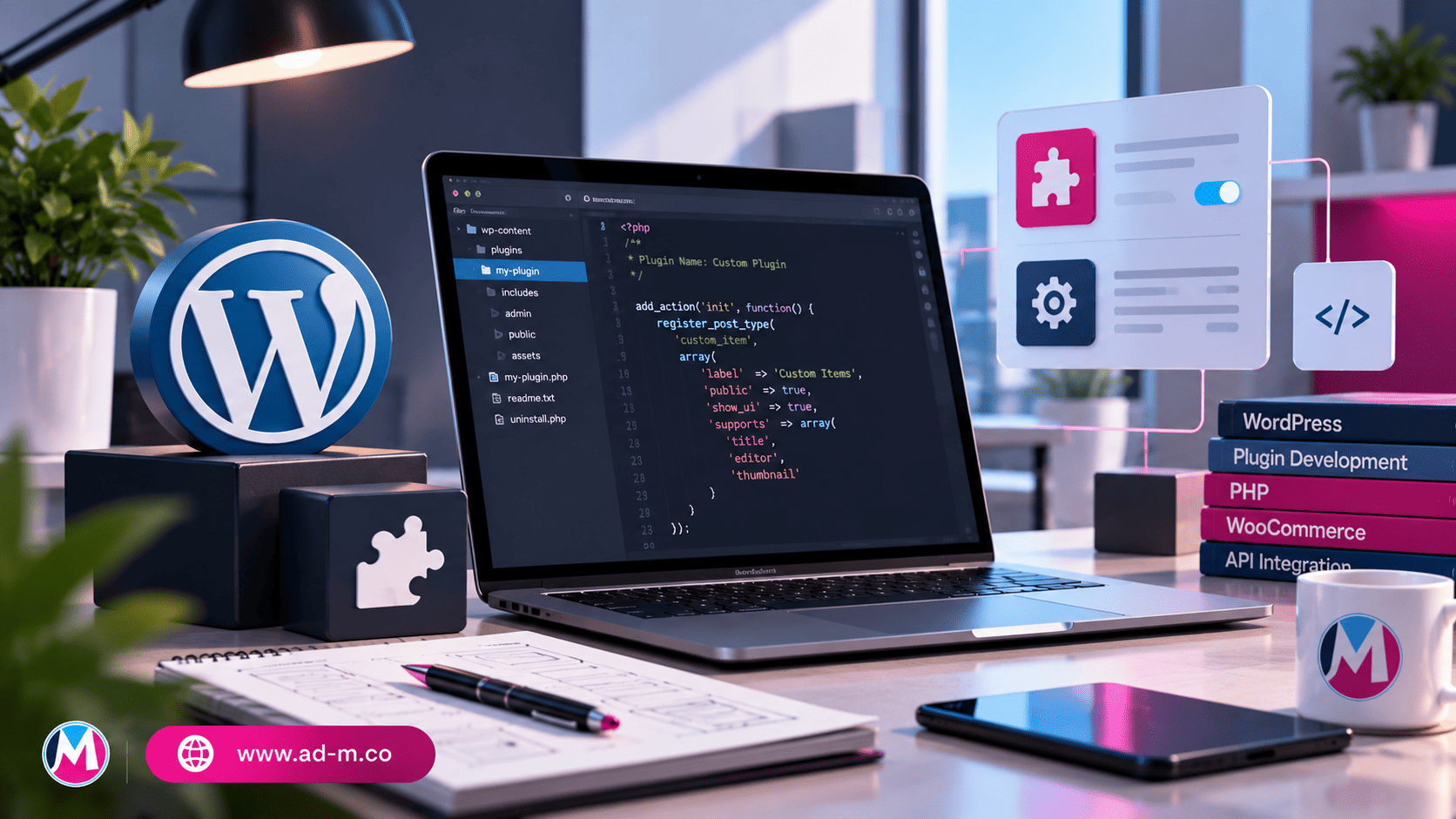
- Creating a dedicated plugin folder inside the `wp-content/plugins/` directory path.
- Creating a primary PHP file matching the folder name containing the standard Plugin Header defining the plugin name, developer, and description.
- Writing code functions and attaching them to the appropriate hooks to execute the required functionality.
4. Why Do Companies Choose Custom Plugin Development Over Pre-Built Ones?
Commercial pre-built plugins often include excessive features that slow down the site and introduce potential security vulnerabilities. Custom plugins are built specifically to fulfill your business needs precisely, featuring higher security and seamless compatibility with external systems via REST APIs.
5. Frequently Asked Questions (FAQ)
What languages are required to develop WordPress plugins?
You need to master **PHP**, alongside a solid grasp of HTML, CSS, JavaScript, and an understanding of MySQL databases.
How does Maria Deprma help clients develop custom plugins?
We design and code custom WordPress plugins and WooCommerce integrations with extreme precision to meet the complex technical requirements of our clients’ projects under top-tier security and performance standards.
Need to Develop a Custom WordPress Plugin That Fulfills Your Business Needs or Integrates Your Store with External Systems?
Get in touch with Maria Deprma’s expert team today to build unique, highly efficient software solutions for you.




Leave a Reply