What is Print Design
What is Print Design? The Ultimate Guide to Printing Brand Identity Materials
Discover the technical and engineering fundamentals required to transform digital designs into high-quality physical print assets, from business cards to massive billboards.
Table of Contents
- 1. Introduction: What is Print Design and Why Is It Important in Corporate Identity?
- 2. Core Technical Standards (CMYK Color System and 300 DPI Resolution)
- 3. Bleed & Safe Zone to Prevent Printing Mistakes
- 4. Paper Types and Luxury Finishes Enhancing Print Quality
- 5. Frequently Asked Questions (FAQ)
1. Introduction: What is Print Design and Why Is It Important in Corporate Identity?
**Print Design** is the specialized artistic branch concerned with preparing and organizing visual materials to appear on tangible physical mediums. Despite widespread digital transformation, professional printed materials like business cards, letterheads, and packaging remain foundational pillars for reinforcing professionalism and building direct trust with customers.
2. Core Technical Standards (CMYK Color System and 300 DPI Resolution)
To ensure colors and prints output as expected without discrepancies, the following technical standards must be met:
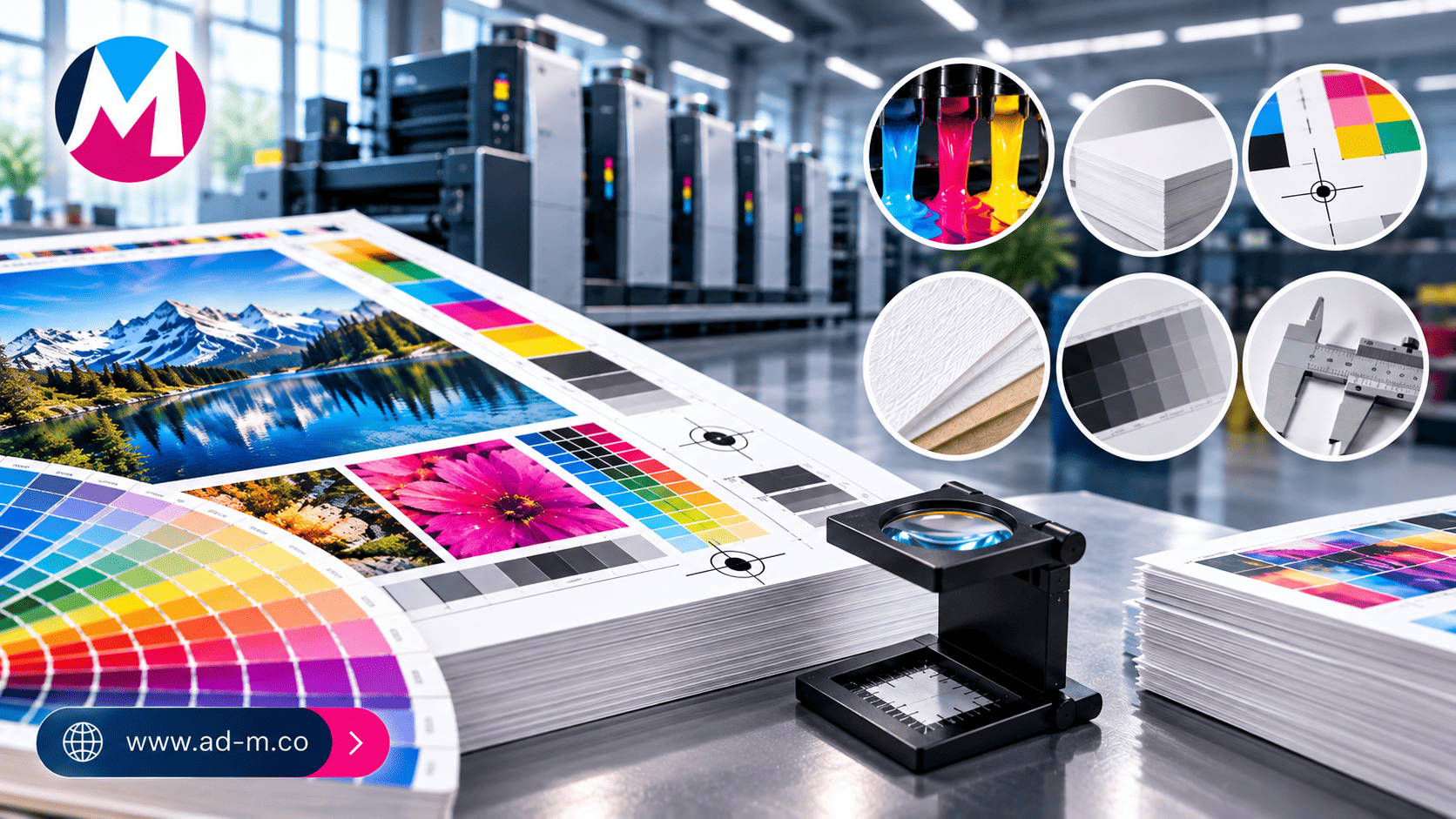
- CMYK Color System: The standard system dedicated to physical printing relying on blending four primary inks (Cyan, Magenta, Yellow, Key/Black), unlike digital screens (RGB).
- 300 DPI Resolution: The standard dot-per-inch ratio required to guarantee crisp edges and keep images free from distortion or pixelation.
3. Bleed & Safe Zone to Prevent Printing Mistakes
Extra space known as “Bleed” (typically 3mm on each side) is added to prevent unintended white edges when trimming paper, while keeping essential text well within the “Safe Zone.”
4. Paper Types and Luxury Finishes Enhancing Print Quality
Materials vary depending on the print job, ranging from cardstock options (Matte or Glossy) to utilizing luxury finishing techniques like Hot Stamping and Embossing to add an exclusive touch.
5. Frequently Asked Questions (FAQ)
Why do printed design colors sometimes look duller compared to screens?
This happens due to designing in RGB instead of CMYK; screens emit self-light while paper reflects light, so color modes must be configured from the start of the design phase.
How does Maria Deprma support print design and file preparation?
We prepare and review all brand identity files according to precise engineering and printing standards to deliver them directly ready for print shops without errors.
Need to Prepare Your Company’s Print Files and Brand Identity Standards Flawlessly for Print Shops?
Get in touch with Maria Deprma’s expert team today to guarantee accurate, stunning prints worthy of your project.




Leave a Reply